


World Refugee Week
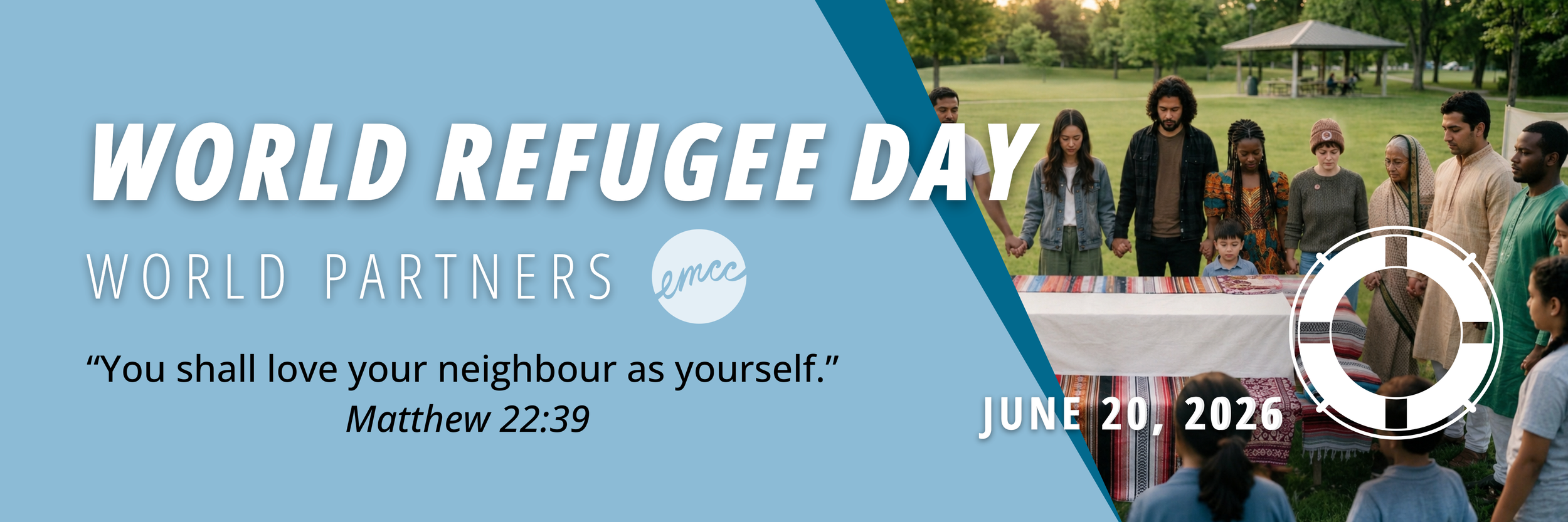
WORLD REFUGEE WEEK 2026 | June 15 - 20
Refuge, Belonging, and the Church’s Calling
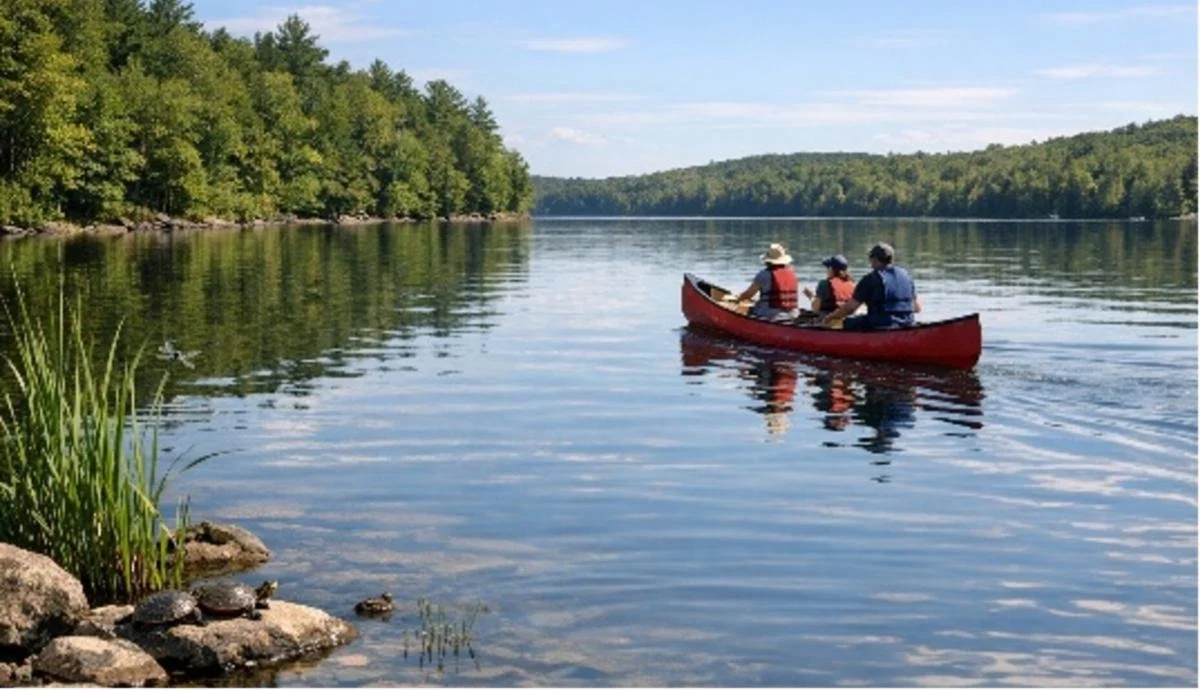
Last summer at EMCC Camp Mishewah, I joined a short canoe trip. Because I cannot swim, I was initially hesitant to participate. However, with encouragement from two friends, I decided to go and spent a memorable day on the water. We paddled across the lake under the Ontario sun and saw turtles and other small creatures along the shoreline. The experience became a helpful image of the church as a place of safety, direction, and hope for people facing uncertainty and displacement.
In the following video, I invite you to catch a glimpse of Juan’s journey from Nicaragua to Canada, and listen to the experiences of others who minister alongside new Canadians.
Our Current Reality
According to the United Nations High Commissioner for Refugees (UNHCR), an estimated 123.2 million people worldwide were forcibly displaced at the end of 2024, and about 40 percent were children.[1] Public discourse often portrays displaced people as desperate, illegal, uncivilized, undeserving, or violent, and as a burden on host communities.
Research published by the Lausanne Movement[2] presents a more complex picture. Many displaced people face physical exhaustion, financial hardship, interrupted education and employment, corruption, limited opportunities, and ongoing cultural, political, and religious tensions. As they rebuild their lives, they may also encounter discrimination, persecution, cultural barriers, conflicted beliefs, and a troubled conscience.
The Church as a Family and a Place of Belonging
Eldon Gamble, a World Partners Recognized Global Worker, urges churches to offer not only material support but also a sense of family and belonging. Churches should learn the stories of refugees and newcomers in their congregations and communities by listening carefully to their experiences and questions. Eldon notes that cross-cultural relationships can be challenging because expectations, communication styles, and values differ. For example, friendship may be understood differently, and practices such as gift-giving can carry deeper meaning in some cultures. He emphasizes that this work should not be one-sided or paternalistic but marked by humility, mutual learning, patience, and openness. He also observes that relationships across cultures can deepen spiritual understanding and make biblical teaching more tangible. For this reason, he encourages each believer to build at least one friendship with someone from another culture and each church to intentionally learn about, pray for, and welcome a specific people group.
A Cooperative and Coordinated Response
Katherine Millum, a pastor for immigrants and refugees at Centre Street Church, in Alberta, emphasizes that Scripture calls Christians to welcome the foreigner. She describes refugees and newcomers as a gift to the church, bringing opportunities for learning, relationship, and mutual transformation. The New Canadian Friendship Centre, at Centre Street Church, focuses on three areas: practical support, community building, and helping people encounter Jesus and grow as disciples. Its ministry includes English classes, friendship, advocacy, practical orientation, and consistent presence. Katherine stresses that confidence and belonging do not grow in isolation but through community.
Over time, Katherine has seen families gain stability, children thrive, people find work, attend university, buy homes, connect to a church, and, in some cases, begin serving others through volunteering. She finds these stories of growth and belonging deeply encouraging.
Katherine encourages churches to move beyond fear and politicization and to recover a broader biblical vision of welcoming strangers. She argues that churches should not avoid this work simply because immigration can feel politically sensitive.
The Cost of Welcoming the Newcomer
This ministry involves real cost, but its blessings often outweigh the sacrifices. D & S, a couple who have served faithfully through another EMCC church in Calgary, have learned that meaningful ministry depends less on formal programs than on trust, hospitality, and the steady work of building relationships that feel like family. They described welcoming newcomers into church life, listening carefully to their stories, showing cultural sensitivity, and offering practical advocacy through services, phone calls, and emails until people feel confident navigating life on their own. D & S also spoke honestly about the demands of this work, including time, emotional energy, sacrifice, and patient endurance. Even so, they emphasized that ministry is sustained by mutual care, shared faith, and a commitment to extend to others the same grace, welcome, and belonging they once received.
A Former Refugee Looks Back
Ben, a former refugee who is now a Canadian citizen, reflects on nearly seven years in Canada since arriving in August 2019. One of the most meaningful changes for him has been the stability of a permanent home after years of displacement. He also values Canada’s welcoming, multicultural environment, the relative absence of racism in his experience, and the ability to maintain cultural connections from home.
At the same time, he acknowledges that he arrived with unrealistic expectations about how easily he would find friendship, financial stability, and a settled life. He misses aspects of life before Canada, including unstructured time with friends, familiar mountain landscapes, and a less regulated way of life. Now studying finance, he hopes to own a business one day and gain greater financial and geographic freedom. For Ben, long-term relationships have made the greatest difference in helping Canada feel like home.
From Fear to Trust
Juan remembers leaving Nicaragua suddenly and the loss of an ordinary youth shaped by school, baseball, and family. At 17, he fled with his mother and brothers to Guatemala, where life as a refugee was marked by hardship, responsibility, and uncertainty.
In 1989, he got a visa to come to Canada, first settling in Winnipeg and later making Calgary his home. Starting over was not easy. He arrived without English, worked hard to support his family, and carried the lasting effects of war and displacement.
Juan has made several trips to serve in Nicaragua over the years despite many costs. While he describes the cost of trauma as a “ghost or dark shadow that he cannot shake off,” his story is one of resilience, gratitude, and faithful service.
Fear forced his family to leave Nicaragua. In Winnipeg, he placed his trust in Jesus, who became his source of strength and, over time, the foundation of a calling to serve others – especially families and churches facing poverty, instability, and need in Nicaragua.
The Blessing of the Newcomer
Welcoming refugees and newcomers is not only a ministry strategy but also a practical expression of Christian hospitality. Like the canoe trip described at the beginning, this journey may begin with hesitation and uncertainty, yet it also requires trust, companionship, and shared direction. Churches can play an important role by offering practical support, building genuine relationships, and creating a sense of belonging. In doing so, they not only serve others but are also shaped by deeper compassion, perseverance, and grace.
Consider how God may be calling you to extend hospitality and friendship to newcomers in your community. Whether through practical support, mentorship, advocacy, or simply building meaningful relationships, every act of welcome can help someone feel seen, valued, and connected. In doing so, we live out Jesus' command to "love your neighbour as yourself” (Matt. 22:39) and reflect God's heart for those seeking safety, belonging, and hope.
As the Lausanne Movement reminds us, hospitality is not only about what host communities offer newcomers. It is also about recognizing the gifts, perspectives, and blessings that newcomers bring. As we open our lives to others, we often discover that God transforms us as well—deepening our faith and expanding our understanding of His work in the world.
Prayer on World Refugee Day
Join us in praying for refugees and displaced people around the world who remain vulnerable to violence, human trafficking, exploitation, and insecurity.
As we reflect on Psalm 82 and Proverbs 31:8–9, ask God to protect the vulnerable, provide for their basic needs, and uphold justice on their behalf.
Pray also for healing and restoration for those carrying the weight of emotional and physical trauma, especially children and older adults. Remember God's promise: “The Lord is close to the brokenhearted and saves those who are crushed in spirit” (Psalm 34:18). Ask Him to bring comfort, healing, and renewed hope to those who are suffering.
Finally, pray that refugees and newcomers will experience supportive community, renewed purpose, and a deeper awareness of God's presence throughout their resettlement journey. As Psalm 23 reminds us, our Good Shepherd provides, guides, and leads His people into rest and wholeness.
- David Benjamin
World Partners Church Engagement Facilitator
Additional Suggested Reading: Lausanne Movement, Forcibly Displaced People
Footnotes:
[1] https://www.unhcr.org/global-trends
[2] https://lausanne.org/occasional-paper/forcibly-displaced-people
To receive future World Partners stories right to your inbox on a quarterly basis, subscribe here.

World Partners
Hours: Monday - Friday 9:00a.m. - 5:00p.m. MT
Phone: 1-877-375-7600 ext. 222
Email: wp@emcc.ca
CONNECT WITH US
Consultations
Join the Email List
CAMPAIGNS
International Development Week
World Refugee Week
Global Workers & Partners Week
LEARN MORE ABOUT OUR
Mission, Vision and Values
World Partners Staff Team
SUPPORT WORLD PARTNERS
PRAY Find strength, guidance, help and encouragement together in prayer. We delight to cultivate rhythms of prayer to form our posture of service, depending upon the Holy Spirit.
GIVE Find out how to support us in our journey to accomplish what Jesus has positioned us to do.